
Why Your Net Matters for Catch and Release Trout
Last Updated: Nov 14, 2026
Choosing the best fly fishing nets for catch and release trout is one of the most consequential gear decisions you will make. A poor net can strip the protective slime from a trout's body, tear fins, or leave a fish exhausted before it ever returns to the water.
Catch and release only works when the fish survives. A net that is too coarse, too stiff, or too deep can cause more harm than the hook itself.
The question is not whether to use a net. It is which net protects your fish and suits your water. The sections below break down mesh material, sizing, and the specific models we recommend, so you can make that choice with confidence.
Rubber Mesh Fly Fishing Nets That Protect Fish Slime and Fins
Rubber mesh is the material most anglers reach for when release matters. A knotless rubber mesh bag lets the trout's slime coat and fins slide through with less catching.
 Angler gently cradling a rainbow trout in rubber mesh fly fishing nets by an Alberta river at sunrise.
Traditional nylon mesh tends to snag. Each knot can hook a fin or scrape scales, and a wet trout thrashing in a tight net can pick up damage quickly. Rubber mesh is softer and more forgiving, which is why it dominates the catch-and-release conversation.
Rubber mesh does have trade-offs. It is generally heavier than nylon and can dry more slowly, so check how the bag handles water between trips. For anglers who fish primarily for release, though, the protection is worth the added weight.
Choosing the Right Fly Fishing Net Size for Your Water
Most sizing advice stops at 'small creek, medium river, big boat.' A more useful approach maps your actual fishing conditions to three measurements: hoop opening, bag depth, and handle length. Use the guide below to translate stream width, bank access, wading depth, and target fish size into a net that works for the water you fish most.
Start with the fish, not the dream fish
Size the net for the trout you catch most, not the trophy you hope for. A hoop that is too small forces you to chase a fish into the net, which prolongs the fight and increases stress. An oversized hoop is awkward to swing in tight banks and heavy to carry. As a starting point, match the hoop opening to roughly one and a half to two times the length of your typical trout, and choose a bag deep enough to cradle the full length of the fish without bunching it.
Map your water to hoop, bag, and handle
- Small creeks and tight, brushy banks (roughly under 5 m wide): compact hoop, short handle, shallow-to-medium bag. You need maneuverability more than reach, and a long handle will catch on branches.
- Mid-size rivers and general wading (roughly 5 to 15 m wide): medium hoop and medium handle. This is the versatile middle ground for most trout anglers, balancing reach with control.
- Large rivers, deep runs, and boat fishing: wider hoop and long handle for reach. A longer handle lets you net a fish without wading deeper or leaning out of a boat.
- Still ponds and small lakes: medium hoop, medium handle, and a floating frame if you fish from a boat or float tube where a dropped net is hard to recover.
Account for wading depth and bank access
Wading depth changes the handle length you need. If you routinely wade thigh-deep, a medium handle gives reach without sacrificing control; if you wade deeper or fish from a boat, a long handle is the practical choice. Bank access matters too: steep, brushy banks reward a short handle you can swing without snagging, while open gravel bars let you use a longer net comfortably.
Consider transport and storage
If you hike or travel to fish, packability matters as much as reach. A long-handle net is awkward in a backpack and can snag on brush on the walk in. Many anglers keep a compact net for hike-in creeks and a longer net for road-access rivers. Watch out: a net that is too long for your pack often gets left at home, which defeats the purpose.
A quick decision checklist
Before buying, confirm four things: the hoop opening against your typical trout length, the bag depth against the full length of the fish, the handle length against your wading depth and bank access, and the packed length against how you travel to the water. One medium net can cover a wide range of trout conditions, with a compact net as a second option for tight creeks and hike-in trips.
The table below maps each type of water to the net dimensions that suit it.
| Water type | Hoop and handle | Key consideration |
|---|---|---|
| Small creeks, brushy banks (under 5 m wide) | Compact hoop, short handle | Maneuverability over reach |
| Mid-size rivers (5 to 15 m wide) | Medium hoop and handle | Versatile middle ground |
| Large rivers and boat fishing | Wider hoop, long handle | Reach without wading deeper |
| Still ponds and small lakes | Medium hoop and handle | Floating frame if fishing from a boat |
Our Top Fly Fishing Nets for Catch and Release Trout
Below is how the leading catch-and-release trout nets compare on the criteria that matter most: hoop opening, bag depth, handle length, weight, mesh type, and frame material. Where a manufacturer publishes a specification, it is listed; where it does not, that is flagged so you can confirm with the retailer before buying. Prices vary by retailer and season, so treat any figure as a starting point and confirm current CAD pricing with the shop or with River People Guides.
Fishpond Nomad Net 2.0 and Rising Lunker Net
The Fishpond Nomad Net 2.0 is a carbon-fibre frame net. The Rising Lunker Net is another release-oriented option. Full hoop and bag dimensions were not listed in our sources, so measure the opening against your typical trout before committing. You can view the Nomad Boat Net in Riverbed Camo to see its details.
Best for: anglers who want a light, release-focused net for trout. Skip if: you need published dimensions or a confirmed price before buying, since those details were not available in our sources.
Fishpond Nomad Mid Length Net and Fishpond Nomad Short Handle Net
These two Fishpond nets are options in this group. The Nomad Mid-Length Boat Net in Salty Camo lists its lightweight composite frame, waterproof construction, and large rubber net bag. The mid-length version is one option for general river work, while the short-handle model is one option for tight banks and small water. Dimensions were not published in the sources used here, so compare the hoop opening against your typical fish length and confirm bag depth with the retailer.
Best for: mid-length for general river work, short handle for small creeks. Skip if: you regularly fish from a boat and need extra reach.
Simms Daymaker, Orvis Wide Mouth Guide Net, and Trident Basics Hand Net
The Simms Daymaker, Orvis Wide Mouth Guide Net, and Trident Basics Hand Net are among the options in the retailer collection reviewed. Published specifications for these three were not available in the sources reviewed, so confirm hoop size, bag depth, and handle length with the retailer.
Best for: Simms for all-around use, Orvis for premium handling, Trident for budget buyers. Skip if: you want a long-handle net, since the Trident and Orvis options here are hand-length designs.
How to compare these nets fairly
Because published specs are inconsistent across brands, use the same checklist for every net you consider: measured hoop opening (widest inside dimension), bag depth, overall handle length, weight with the bag dry, mesh material, frame material, and whether a replacement bag is sold separately. A common pattern is that carbon frames save weight but cost more, while aluminum frames are heavier and cheaper. Net weight varies with frame and bag size, so check the weight of any net you consider before carrying it all day. Watch out: a net that feels light in the shop can swing awkwardly once the bag is wet, so test the balance with a wet bag if you can.
Floating Fly Fishing Nets and Why Buoyancy Helps
A floating net can make a dropped net easier to recover in a current, since it sits on the surface.
Floating nets are most useful on rivers with strong flow and on boats where a dropped net is hard to recover. They matter less on still ponds. If you fish wide, fast water, buoyancy is a practical feature rather than a luxury.
Wading Nets for Fly Fishing Rivers and Creeks
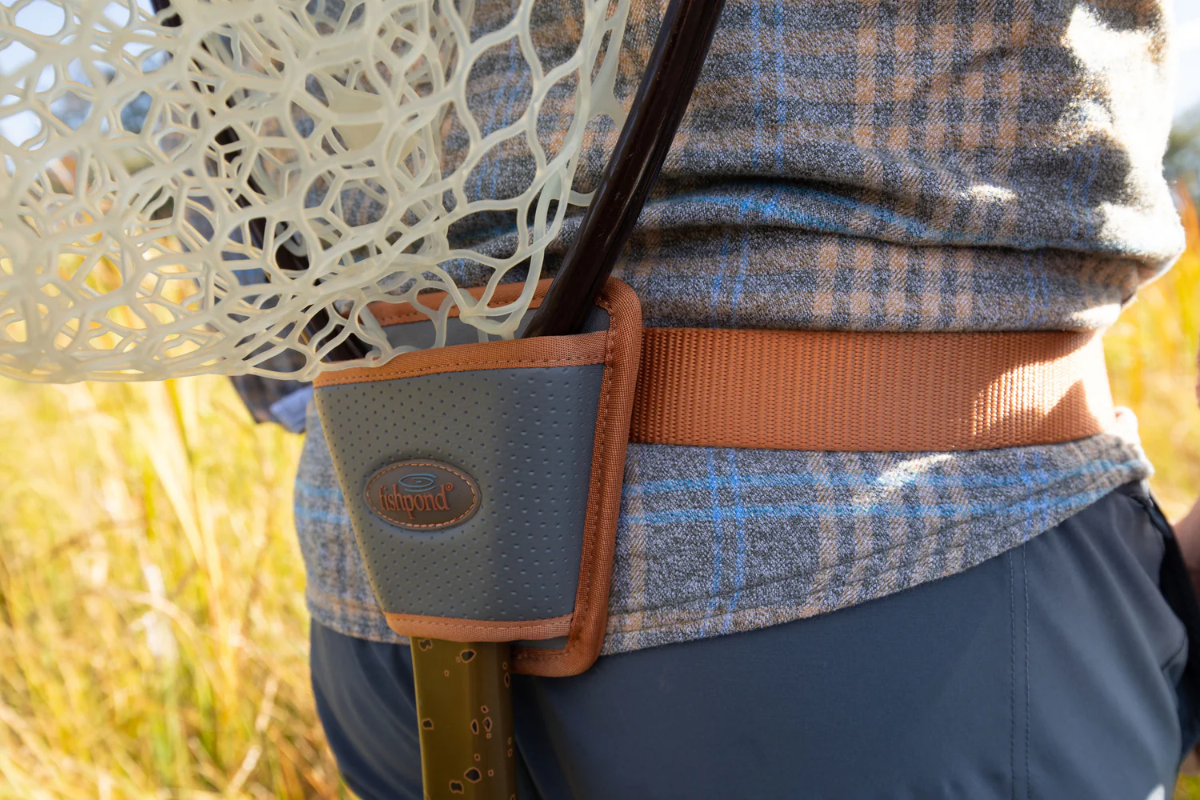
Wading changes what you need from a net. You want a shape that stays out of the way, a handle that does not catch on your vest, and a bag that can be reached one-handed while you keep your footing.
For creeks, a short handle and compact hoop work best. For larger rivers where you wade thigh-deep, a medium handle gives you reach without sacrificing control. Keep the net clipped to your vest or a magnetic release so you can drop it and keep both hands free.
Pick the Net That Fits Your Next Trip to the River
The best fly fishing net for catch and release trout protects the fish first. Start with rubber mesh if release is your priority, then match the hoop and handle to your water.
Use the recommendations above as a starting point, and compare the specifications of each net against the water you fish most. If you want help choosing, River People Guides can point you toward the right net for your rivers and your style of fishing.
Frequently Asked Questions
What type of net is best for catch and release trout?
A soft rubber or knotless mesh net is generally the best choice for catch and release trout. Knotless and rubber mesh reduce friction against the fish's slime coat, which helps protect the scales and fins. Pair the mesh with a net bag deep enough to hold the trout without folding it, and keep the fish in the water whenever possible. River People Guides can help you think through your choice of net for your local water.
Is rubber mesh better than nylon mesh for trout?
For catch and release, rubber mesh is usually the better option. Nylon monofilament can snag scales, fins and the protective slime coat, while rubber mesh is softer and less likely to tangle in hooks or fins. Nylon can still work for quick landings on a fly rod, but rubber mesh offers more protection when you plan to release fish. Check the bag depth and hoop size as well, since they affect how easily the trout can be handled.
What size landing net do I need for trout?
Most trout fishing on Alberta rivers is well served by a net with a moderate hoop and a bag deep enough to hold a full-length fish. A short handle suits tight creeks and bushwhacking, while a longer handle helps when you are reaching across deeper runs or fishing from the bank. Measure your typical trout size and your water type before buying. Ask River People Guides for advice on the hoop and handle that suit your fishing.
Do fly fishing nets need to float?
A floating net is useful but not essential. Floating nets stay on the surface if you drop them in the river, which saves time and reduces the risk of losing a net in fast current. If you fish from a boat or wade deep water, buoyancy is worth considering. Many anglers prefer a net with a floating frame and a clip or tether so the net stays within reach while you work the fly.