
Top Fly Patterns for Alberta Trout
The best fly patterns for Alberta are the ones that match what trout are actually eating, and that changes with the season, the water, and the hatch in front of you.
They're field-proven and widely available, so you can build a working fly box without guessing.
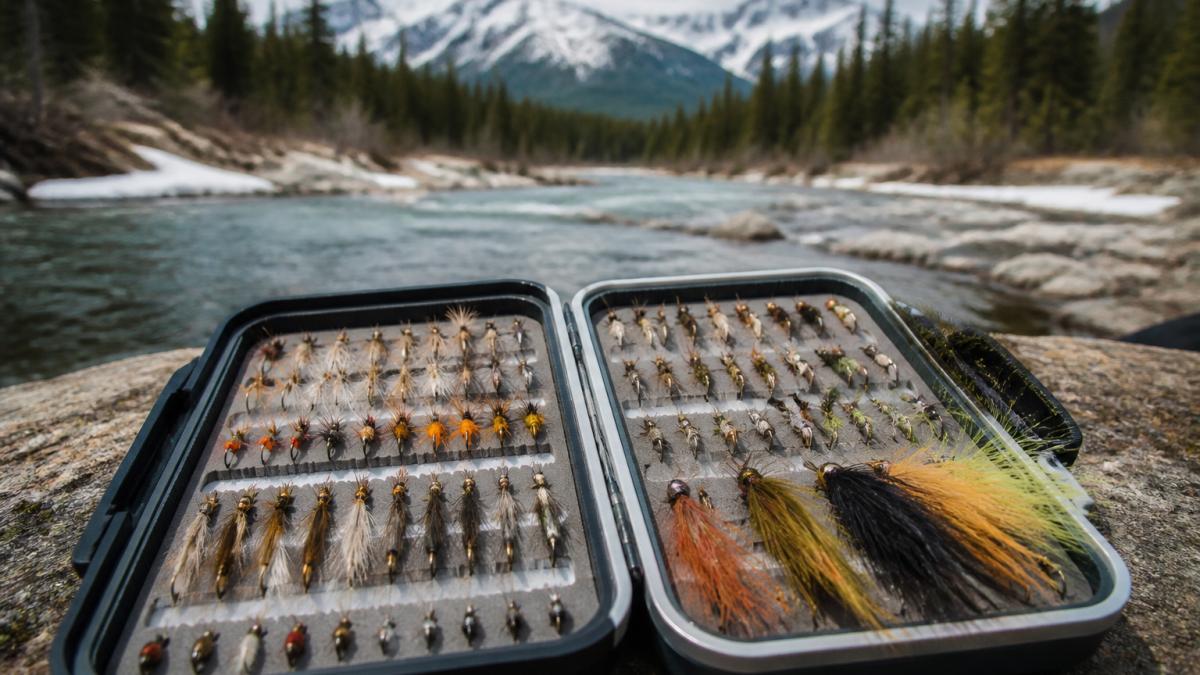 Close-up of an open fly box displaying tied dry flies, nymphs, and streamers in various sizes and colors, with a river and mountains visible in soft focus behind
Dry Flies: Match the Hatch
Dry-fly fishing is the most exciting way to catch trout, you see the rise, you cast, and the fish takes on the surface.
Parachute Adams (sizes 12-18) is the workhorse dry fly for Alberta, imitating most mayflies well enough to fool trout across the province.
Elk Hair Caddis (sizes 12-18) handles caddis hatches all season.
Chubby Chernobyl (sizes 6-12) is a bushy, high-floating dry that works when trout feed aggressively on larger terrestrials or in fast water.
Nymphs: Subsurface Success
Most of the time, trout feed below the surface. Nymphs make up most of their diet, which is why nymphing produces consistent results even when dry-fly action is slow.
Pheasant Tail Nymph is the foundation pattern. It's simple, effective, and imitates a range of mayfly nymphs. Fish it in sizes 12-16 on a dead drift near the bottom.
Hare's Ear is another essential nymph, its dubbing creating a buggy silhouette trout recognize.
Streamers and Wets: Aggressive Presentations
When you want to cover water fast or target larger trout, streamers and wet flies imitate small fish, leeches, and other protein-rich prey.
Woolly Bugger is the most versatile streamer you'll own, imitating a leech, minnow, or large nymph depending on how you fish it.
Tungsten Squirrel Leech (winter patterns on the Bow) gets down fast and imitates the leeches trout hunt in cold water.
Early Season Fly Patterns for Southern Alberta
Early season means cold water and limited insect activity.
San Juan Worm is the early-season secret, not a worm but a leech imitation that works.
Zebra Midge (sizes 18-22) handles the small midge hatches that happen even in cold water; midges hatch year-round in tailwaters like the Bow.
Red Devil Nymph is a proven early-season pattern on the Bow. It's flashy and attracts attention in cold, clear water.
Bow River Fly Patterns by Season
The Bow is Alberta's most famous trout river, a cold, clear tailwater with consistent flows, so hatches are predictable and patterns reliable.
The Best Flies for Fall Fly Fishing: 10 Must-Have Patterns | Ep. 146
Ventures Fly Co.
Winter Patterns on the Bow
Winter on the Bow means small flies and slow presentations. Trout move little and eat less in the cold, but they still eat.
Red Devil Nymph and Tungsten Squirrel Leech dominate winter. Both get down fast and appeal to trout in a low-metabolism state.
Zebra Midge is your backup. If the nymphs aren't working, switch to a small midge. Sometimes the smallest offering is the right one.
Spring Through Summer on the Bow
Spring brings warmer water and more insect activity. By late spring, dry-fly hatches begin.
Blue-Winged Olive (sizes 14-18) is a major hatch.
PMD (Pale Morning Dun, sizes 14-18) hatches in summer. It's similar to the BWO but lighter in color.
Parachute Caddis (sizes 12-18) handles caddis hatches, which intensify in summer.
Chubby Chernobyl works all summer for terrestrials.
Fall Fly Patterns for Trout
Fall is underrated. You can have excellent dry-fly fishing well into October.
March Brown patterns (sizes 12-14) hatch in fall.
Caddis patterns remain effective. Continue fishing Elk Hair Caddis and Parachute Caddis.
Chubby Chernobyl is still productive. Terrestrial season extends into fall. Grasshoppers are active until the first hard frost.
Streamers become more effective as water cools.
Alberta Fly Fishing Hatch Chart and Pattern Matching
A hatch chart is only useful if it tells you what to tie on, what size to fish, and how to present it. The table below connects the major hatches across the province to specific patterns, size ranges, emergence windows, and the water types where each matters most. Use it to plan before you leave the truck and to decide when you're watching insects come off.
| Hatch | Typical window | Best patterns | Sizes | Where it matters most | Presentation cue |
|---|---|---|---|---|---|
| Midges | Year-round, strongest in cold months | Zebra Midge, Griffith's Gnat, small Parachute Adams | 18-22 | Tailwaters, spring creeks, stillwater edges | Dead drift under an indicator; switch to a small dry when you see sipping rises |
| Blue-Winged Olive | Spring and fall, often mid-afternoon | Parachute Adams, dedicated BWO emerger, Pheasant Tail | 14-18 | Freestone rivers, tailwaters | Fish the emerger in the film during the hatch; switch to a dry when fish break the surface |
| March Brown | Spring and fall | March Brown dry, Parachute Adams, Hare's Ear | 12-14 | Riffles and runs on larger rivers | Bushy dry fished on a drag-free drift along seam lines |
| PMD | Summer, often late morning to afternoon | PMD dry, Parachute Adams, Pheasant Tail | 14-18 | Tailwaters and cool freestone reaches | Match the lighter color; fish the dry during the hatch and the nymph before it |
| Caddis | Spring through fall, evening peaks | Elk Hair Caddis, Parachute Caddis, Hare's Ear | 12-18 | Riffles, pocket water, banks | Skitter the dry in the surface film; swing a wet caddis when fish won't commit |
| Stoneflies | Late spring through summer | Chubby Chernobyl, Stimulator, Pat's Rubber Legs | 6-12 | Fast water, boulder gardens, mountain streams | Fish the dry tight to structure; drop a nymph off the back in deep pockets |
| Terrestrials (hoppers, ants, beetles) | Mid-summer through first hard frost | Chubby Chernobyl, hopper patterns, ant patterns | 6-12 | Grass banks, meadow water, windy days | Cast close to the bank and let the fly sit; twitch it once if nothing rises |
| Leeches and baitfish | Year-round, best in cold or off-color water | Woolly Bugger, Tungsten Squirrel Leech | 6-10 | Tailwaters, stillwaters, deep pools | Slow strip or dead drift on a tight line; speed up only when fish are active |
How to Read the Chart
The timing column is a window, not a guarantee. Elevation, snowpack, and the previous week's weather shift hatches by days or weeks. Watch water temperature as your real trigger: most mayfly and caddis activity builds once water holds in the high single digits Celsius and peaks in the low-to-mid teens.
Pattern Switching Logic
When fish are rising but refusing your dry, the problem is usually stage or size, not pattern name. Try these switches in order:
- Drop a size. Going from a 14 to a 16 or 18 often converts refusals when fish are keyed on smaller insects.
- Switch stage. If the dry is ignored, fish an emerger or a nymph just under the film in the same size and color.
- Change silhouette. A Parachute Adams covers most mayflies, but a dedicated emerger or a comparadun-style fly can beat it when fish are selective.
- Move the fly. A dead drift is the default, but a twitch or a swing can trigger fish that have seen too many drag-free presentations.
Pro TipCarry the chart's patterns in two sizes each. A box with a 14 and a 16 of every major dry and nymph covers more real situations than a box with ten patterns in one size.
Water Type Adjustments
- Tailwaters (cold, clear, steady flows): smaller flies, longer leaders, and precise dead drifts. Midges and BWOs dominate much of the year.
- Freestone rivers (variable flow, more color): larger attractor patterns and streamers work better, especially after rain.
- Stillwaters (lakes and reservoirs): leeches, midges, and callibaetis-style mayflies matter more than river hatches; fish slow strips and hang flies under an indicator.
The chart is a starting point. Water conditions, weather, and time of day all affect what trout eat. But matching the hatch, then adjusting size and stage before you change pattern, is always a solid strategy.
Building Your Alberta Fly Box: Beginner Prioritization
You don't need 200 flies. You need the right 20. Start here and expand as you fish more.
Essential dry flies:
- Parachute Adams (sizes 12, 14, 16)
- Elk Hair Caddis (sizes 14, 16)
- Chubby Chernobyl (sizes 8, 10)
Essential nymphs:
- Pheasant Tail Nymph (sizes 14, 16)
- Hare's Ear (sizes 14, 16)
- San Juan Worm (sizes 12, 14)
Essential streamers:
- Woolly Bugger in black (sizes 6, 8)
- Woolly Bugger in brown (sizes 6, 8)
Seasonal additions:
- Zebra Midge (sizes 18, 20) for winter and early season
- Parachute Caddis (sizes 14, 16) for caddis hatches
- PMX (sizes 10, 12) for spring and summer
Start with this box. Fish it. Learn what works on the waters you fish. Then add patterns based on what you observe hatching.
When and How to Fish Each Pattern
Knowing which pattern to use is half the battle; knowing when and how to fish it is the other half, and the how changes with water type, flow, clarity, and season. The guidance below is organized by pattern family and the conditions you'll actually meet across the province.
Dry Flies
Fish dries when you see rising fish or insects on the water, but the presentation matters more than the pattern name.
- Riffles and pocket water: cast upstream and let the fly drift drag-free. Keep the rod tip low and mend immediately. Fish hit fast here, so set on any rise.
- Smooth tailwater flats: lengthen your leader, land the fly softly, and use a reach mend to keep line off the water. These fish are the most selective and the most easily spooked.
- Banks and undercut edges: cast close and let the fly sit. A twitch or a small drag can trigger fish that ignore a perfect drift.
Nymphs
Nymphs work all the time, but depth and drift speed decide whether you catch fish or just decorate the bottom.
- Indicator nymphing: set the indicator roughly one and a half to two times the water depth above the fly. Adjust before you change patterns.
- Euro-style tight-line nymphing: keep the rod tip high, lead the flies slightly, and watch the sighter for stalls and ticks. This is the most effective method in fast pocket water.
- Deep pools and winter runs: add weight or switch to a tungsten-bead pattern. Fish slow and expect subtle takes.
Streamers and Wets
Streamers are for covering water and targeting larger, more aggressive fish.
- High or off-color water: fish streamers tight to the bank and behind structure. Dark colors and larger sizes (6-8) show up better.
- Clear, low water: downsize to 8-10, use natural colors, and fish slower. Long casts spook fish in clear conditions.
- Cold water: slow strips and dead drifts on a tight line outperform fast retrieves. Trout won't chase far.
Seasonal Switching
- Early season (cold water): nymphs and small midges fished slowly. Bring the fly to the fish rather than expecting a chase.
- Spring: start with nymphs, watch for the first mayfly and caddis activity, and switch to dries when you see rises.
- Summer: dries during hatches, terrestrials along the banks, and streamers early and late. Nymphs remain the fallback in the middle of the day.
Key TakeawayThe most common mistake is changing patterns when the real problem is depth, drift, or presentation. Adjust those first, then change the fly.
Reading Water Before You Tie On
Before you choose a pattern, spend two minutes reading the water.
According to Orvis's guide to Western Canada fly patterns, matching the hatch is the foundation of successful fly selection. The patterns we've outlined here are proven across these waters and backed by years of field testing.
When you're ready to move beyond basic patterns, River People Guides can help you understand the subtleties, which sizes work best on specific rivers, how to adjust patterns for water conditions, and where to find the most productive water.
Frequently Asked Questions
What are the best flies for catching trout in Alberta?
The best fly patterns for Alberta trout include Parachute Adams and Elk Hair Caddis as reliable dry flies, Pheasant Tail Nymphs for subsurface fishing, and Woolly Buggers for aggressive presentations. Success depends on matching the hatch to the current season and water conditions. Early season calls for smaller patterns like Zebra Midges, while summer brings larger mayfly and caddis imitations. Local guides can advise on what's hatching on your specific river on the day you fish.
What fly patterns work best on Alberta rivers in spring?
Spring fly fishing in Alberta focuses on early season patterns that imitate emerging insects. Zebra Midges in sizes 18-22 and small nymphs like the Pheasant Tail are effective as water temperatures rise. Parachute Adams in sizes 12-18 work well as dry-fly activity increases. The Red Devil Nymph is particularly effective on tailwater streams like the Bow River. Water is typically colder and clearer in spring, so smaller patterns and slower presentations produce better results than larger streamers.
Which dry flies should I carry for Alberta trout?
Essential dry flies for your Alberta fly box include Parachute Adams (sizes 12-18) for mayfly hatches, Elk Hair Caddis (sizes 12-18) for caddis emergences, Chubby Chernobyl (sizes 6-12) for larger terrestrial imitations, and Bloom's Parachute Caddis (sizes 12-18) as a specialized caddis pattern. These cover the primary hatches across Alberta's trout streams. The Parachute Adams is the most versatile and should be your first priority if building a beginner's fly box.
What nymphs are effective for Alberta trout?
Effective nymphs for Alberta trout include Pheasant Tail Nymphs for general use, Red Devil Nymphs for winter and tailwater fishing, and Tungsten Squirrel Leeches for deeper presentations. The Pheasant Tail works year-round and is an excellent starting point for nymph fishing. Tungsten-bead patterns like the Squirrel Leech sink faster and reach fish in deeper pools during winter months on rivers like the Bow. Nymph fishing is often more productive than dry-fly fishing, especially in spring and fall.
How do I choose a fly pattern for changing water conditions?
Match your fly pattern to three factors: current water conditions, the season, and what insects are hatching. In clear, low water, use smaller patterns (sizes 16-20) and match specific hatches closely. In high or turbid water, switch to larger, more visible patterns (sizes 8-12) with brighter colors. Streamers and nymphs work better in fast currents. Ask local guides or check hatch reports for the specific river you're fishing. Carrying a range of sizes in each pattern type gives you flexibility to adapt quickly.