
Why Water Levels Decide Whether Alberta Rivers Are Fishable
Alberta river fishing water level forecasts tell you more about your next trip than any fly box ever will. The first thing to check on any Alberta river is the flow, not the weather. A river running too high or too fast can turn a great day into a cold, frustrating one.
Water levels control three things at once: how safely you can wade, where trout hold, and how easily your fly drifts naturally. When flows climb, fish move into softer water along the banks. When flows drop, they concentrate in deeper pools and runs. Knowing which situation you face before you leave home saves hours of wasted effort.
- Flow controls safe wading depth and footing
- Flow shapes where trout hold in the current
- Flow affects how your fly drifts and presents to fish
- Flow changes can shift hatch timing and fish activity
Finding the Right River Forecast and Gauge Data
Start with official river information from the provincial and federal water monitoring networks. Search for the river you plan to fish, then open the station page that reports the most recent readings. These pages show current conditions, past trends, and short-term forecasts in one place.
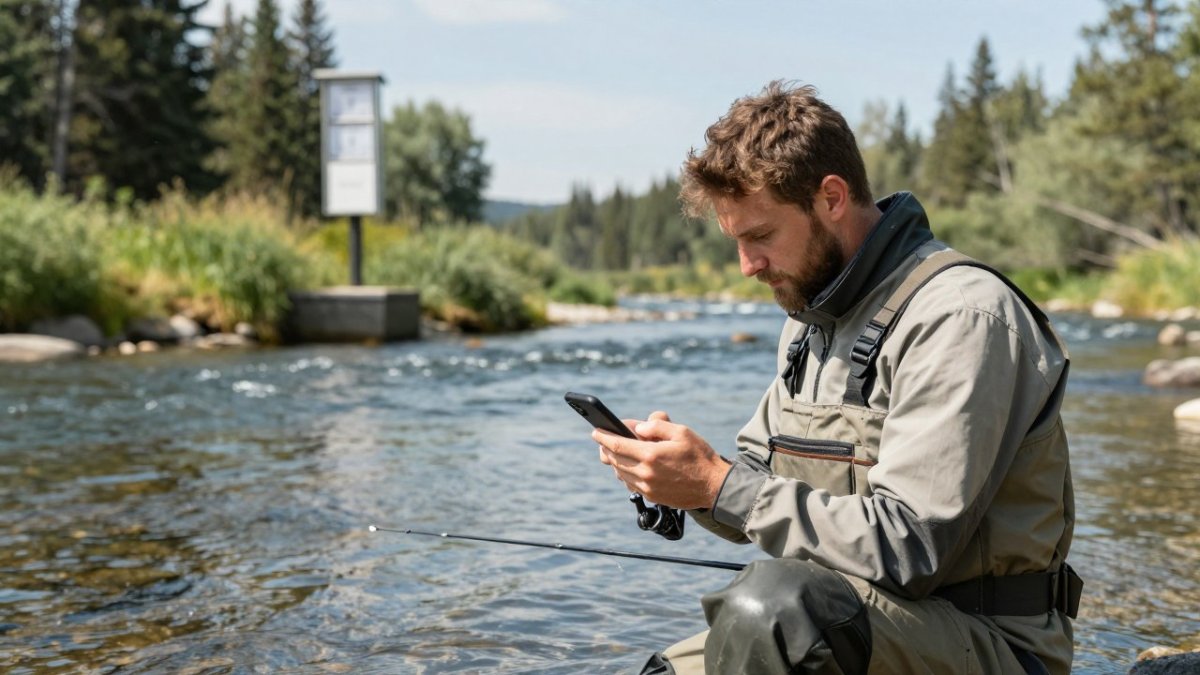 Angler checking Alberta river fishing water level forecasts on a phone by a riverside gauge station
Look for three things on any gauge page: the current level, the trend over the last few days, and the forecast timeframe. A rising trend is often more important than the number itself. Save the station page on your phone so you can check it quickly before you commit to a drive.
Reading Flow Rates in Cubic Metres per Second
Flow rate is usually reported in cubic metres per second, often written as m³/s (Water in Canada). This unit measures how much water passes a point each second. A higher number means more water and faster current.
Compare today's reading with the river's typical summer flow rather than judging the number alone. A flow that looks high on paper may be normal for that river in spring.
- Note the river's typical flow for your target month
- Compare the current reading against that baseline
- Watch whether the reading is rising, falling, or steady
Gauge Locations and Forecast Limitations
A gauge only measures water at one spot. Conditions upstream or in a tributary can change the flow at your fishing location within hours. Always check the gauge closest to your section of river, and check a second gauge upstream when you can.
Forecasts are estimates, not guarantees. Rain that falls on a mountain basin may take a day to reach town. Treat forecasts as a planning tool and recheck the numbers the morning you go.
Alberta River Flow Forecast Thresholds for Fly Fishing
Most forecast pages give you a number and leave you to guess what it means for fishing. The missing step is translating discharge into a decision: can I wade, where will fish hold, and is this river worth the drive?
Start by finding the median flow for your target month on the gauge page you already use. Most provincial and federal station pages show a historical percentile band alongside the current reading. That band is your baseline.
Building River-Specific Thresholds
On a wide, moderate-gradient river, wading is generally more comfortable when flow sits near or slightly below the seasonal median and the trend is flat or falling. As rising water narrows safe access and changes where fish hold, choosing river fishing lures to suit the current and available bank positions becomes part of adapting your approach.
Species shifts the target too. Trout tolerate and feed in faster, colder water than walleye or pike, so a flow that spooks trout may still fish well for warm-water species in slower pools. Match your threshold to the fish, not just the river.
- Near seasonal median, flat or falling: Prime wading and drift conditions; fish standard water
- 25th-50th percentile, falling: Low and clear; fish become spooky, so lengthen leaders and approach quietly
- 50th-75th percentile, rising: Fish push to soft bank water; fish edges and slow your drift
- Above 75th percentile or rising sharply: Bank fishing only; wading is unsafe and clarity usually drops
- Below 25th percentile: Fish concentrate in deeper pools and runs; target structure and shade
Watch out: percentile bands are calculated over different periods on different stations, so confirm whether the baseline is monthly or annual before you trust the comparison.
Connecting Flow to Species and Technique
A threshold is only useful if it changes what you tie on. In high, off-color water, fish tend to rely more on feel than sight, so larger, darker flies and slower presentations are often worth trying.
Keep a simple log for the rivers you fish most: date, gauge reading, percentile, clarity, and what worked.
The table below turns the flow percentile bands described in this section into practical fishing decisions.
| Flow condition | Percentile band | What it means for fishing |
|---|---|---|
| Near seasonal median, flat or falling | Around 50th | Prime wading and drift; fish standard water |
| Low and clear | 25th-50th, falling | Fish spooky; lengthen leaders, approach quietly |
| Rising, moderate | 50th-75th | Fish soft bank water; fish edges, slow drift |
| High or rising sharply | Above 75th | Bank fishing only; wading unsafe, clarity drops |
| Very low | Below 25th | Fish pools and runs; target structure and shade |
Bow River Fishing Reports: Combining Forecasts With Water Clarity
Flow and clarity are two different signals, and the mistake most anglers make is reading them separately. Flow tells you whether the river is safe and where fish will hold; clarity tells you whether fish can see your fly and how they will feed. The useful decision comes from reading them together, alongside the weather that drives both.
Reading the Three Signals Together
Start with the flow trend over the last 48 to 72 hours, not just today's number. A stable or slowly falling flow with clear water is the most predictable combination: fish are settled, visibility is good, and standard presentations work.
Weather is the input that drives both signals. Rain in the headwaters takes time to reach your stretch, so a sunny day at the access point can coincide with a muddy pulse arriving from upstream.
- Stable flow, clear water: Standard tactics; fish confidently
- Falling flow, clearing water: Improving conditions; fish the edges as the river settles
- Rising flow, clear water: Fish soft bank water; watch for the peak
- Rising flow, turbid water: Poor visibility and safety risk; choose another river or day
- Low flow, clear water: Spooky fish; long leaders, quiet approach, smaller flies
Using Fishing Reports Without Overweighting Them
Local fishing reports are useful for clarity, insect activity, and recent catches, but they are snapshots, not forecasts. A report from two days ago may describe water that has since risen. Use reports to confirm what the gauge and weather are telling you, not to replace them.
Watch out: clarity can vary dramatically between an upstream gauge and your access point, especially below tributary confluences, so a clear reading at the station does not guarantee clear water where you plan to fish.
A Simple Trip-Planning Sequence
Run the same sequence every time: check the basin weather forecast, check the gauge trend and percentile, check clarity via a recent report or webcam, then decide whether to go, where to go, and what to tie on. Keep a backup river in mind, one with a different drainage, so a muddy pulse on your first choice does not end the day.
How Water Levels Affect Fly Fishing Success
Water levels shape your entire approach. In high water, fish seek slower margins, so cast tight to the bank and slow your drift.
A common mistake is fishing the same water the same way regardless of flow. Adjust your fly size, weight, and drift speed to match the conditions. Heavier flies and split shot help in faster water, while lighter setups suit calm, low flows.
Experience counts here. Guides adjust tactics as conditions change, since flexibility matters on the water.
River Fishing Safety After Rain and Snowmelt
Rain and snowmelt can raise Alberta rivers quickly, sometimes faster than anglers expect. Cold water, fast currents, and slippery rocks create real hazards, even on rivers that look calm from the bank.
Before you wade, follow these habits:
- Never enter fast or rising water, even if it looks shallow
- Wear a wading belt and a properly fitted life jacket
- Test each step with a wading staff before you commit your weight
- Tell someone your plan and your expected return time
- Leave immediately if the water rises while you are on the river
If you fish with children or beginners, choose a conservative flow and stay near the bank. Safety always comes before the catch.
Planning Your Next Trip Around the Forecast With River People Guides
Good planning turns forecast data into a great day on the water.
If you want help reading these forecasts, River People Guides can help. book a guided trip on your chosen river and let us help with the timing. You can also review fishing regulations for the Bow River before you go, and plan your trip with flexible dates so you can wait for the right flow.
For families or anyone concerned about changing water, our river safety guide for Alberta anglers covers cold water, fast currents, and slippery rocks in more detail.
Reading Alberta river fishing water level forecasts takes practice, but it rewards you every time. River People Guides is ready to help you plan safer, smarter trips on the water.
Frequently Asked Questions
Where can I check river water levels and forecasts?
Alberta's river forecasts and gauge readings are published through provincial and federal river monitoring tools, which show current flow rates measured in cubic metres per second along with forecast trends. Check the gauge closest to your planned section of river, since flows can differ substantially between upstream and downstream stations. Pair the numbers with a recent fishing report from a local shop, because a forecast tells you the water level but not how the fish are behaving at that level.
How do water levels affect river fishing?
Higher flows push trout toward slower edges and deeper seams, making them harder to reach with a fly and harder to fight in heavy current. Very low flows concentrate fish in deeper pools and can make them wary and selective. Water clarity also changes with flow, so a rising river often turns murky, which reduces the distance at which trout can see your fly. Matching your technique and fly choice to the flow is usually the difference between a slow day and a productive one.
How often are river level forecasts updated?
Most river forecasts update on a regular schedule, with real-time gauge readings refreshing frequently and forecast outlooks revised as weather changes. Forecast timeframes vary, so a short-range outlook may be more reliable than one projecting several days ahead. Check the forecast update time shown on the page before you leave, and recheck the morning of your trip, since rain or warm temperatures can shift a river's level within hours.
Are river water level forecasts the same as fishing reports?
No. A water level forecast describes flow, measured in cubic metres per second, and how it is expected to change. A fishing report describes what anglers are experiencing: fish activity, hatches, water clarity and wading conditions. The two complement each other. Use the forecast to decide whether the river is safe and fishable, then use a recent fishing report from a local shop to choose your fly, your section and your timing.